How Reading Short Stories Made Jacob Tomsky A Better Writer

Screen Shot 2015-04-28 at 7.31.05 PMAre you familiar with the Short Story Thursdays emails?

Every week for almost five years, Jacob Tomsky has been researching and sending a short story to an email list of rabid readers. He doesn’t write the stories (he’s a best-selling memoir writer and budding novelist), but he does curate them.

Driven by his mood, he plucks a story that speaks to him from the vast slush pile of Public Domain works, and sends it to thousands of his Internet friends.  Not only that, but Tomsky writes a passionate (and often expletive-laden) exhortation to readers as to why they should read this week’s story. If Tomsky’s ‘dispatches’ are the amuse-bouche of Short Story Thursdays, the stories are the meat.

Since he’s been doing this for four years, he must always really loved short stories, right?

“I actually hated short stories for a really, really long time. Maybe I still kind of do,” he laughs.  “I don’t buy short story books, I never did. I was never a fan. I love novels. That’s what I like to read and that’s what I like to write.”

How It All Started

So here’s how it all started: Tomsky had a full time job he hated, in a hotel.

Bored, he began printing out short stories from the web – using company paper and company toner– because it “would look like I was working, like I was just reviewing documents or something.”

When a similarly-bored bellman asked him what he was reading, Tomsky stumbled onto something that has kept him sending out his dispatches weekly, years after breaking free of the job he hated.

“This was not a man that you would consider being a lover of literature at all and he read it and said ‘what’s next?’” Tomksy said. “I really got joy not only out of the minor escape it gives you from work, but also the fact that I was exposing people to short stories that had never even considered it before.

“People were talking about literature and that was very exciting for me as a long time lover and a writer of literature. I was able to get people to read these short stories, [people] that had never read before.”

Why short stories? Well, apart from their utility as a good cover at work, Tomsky points out,

“Everything’s shortening, our attention spans are dropping. I don’t think it’s even a bad thing. Twitter’s 140 characters, Vine videos are 6 seconds. Everything is so short and people’s attention spans are rapid fire.”

Short stories seem like the perfect way to get people reading, “…and I pick really short ones. Really short. So it’s just something people can read on the train and not feel like they’re having to trudge through it.”

The Beauty of the Short Story

Because he’s posting stories mostly from public domain, Tomsky is rediscovering some older writers, some who have been largely forgotten.

“This week’s story,” he says, about a recent Dispatch, “is making people cry. I’ve had six people email me already and say this story made them cry… I couldn’t even find out any information abou this author. The fact that I get to breathe life into these forgotten authors is wonderful.”

Another advantage of reading older works is, “some of this langauge is just amazing. It’s not even antiquated, we just don’t speak like this. Some of these words have fallen out of favor. Phrases and just the tone of language has changed so much. To get to read something …that’s so different from any other sentence you’ll read in the rest of the week, has been wonderful.”

Of course, the short story form has evolved a lot since its invention, and many of the stories Tomsky finds irritate readers because they aren’t subtle or don’t  have the emotional impact of modern stories. And, a frustration for Tomsky is that the public domain collection is ‘a sea of white males’.

Still, Tomsky sees a a benefit to reading these stories week after week. “There’s been some great writing…and it’s kind of great to see what we expected from short stories in the past. Those were pure entertainment in the past. It wasn’t entertainment that was vying for attention with any other form of entertainment, you were just happy to be reading anything.”

He adds, “There have been some stories I’ve read on public domain that I think are better than anything I’ve read publishing now.”

Benefits As A Writer

Although the New York Times called Tomsky’s whose memoir is titled “Heads In Beds: A Reckless Memoir of Hotels, Hustles and So-Called Hospitality” ‘an effervescent writer’, he wasn’t writing humor before SST.

“I had three novels pior to that and none of them had a joke in it,” he says. “It wasn’t until I started ShortStoryThursdays that I started with the humor.  I think that really primed me for when I had to write a funny book about the hotel world.  I was totally ready because I had been practising.”

Another, unexpected benefit of writing to a group of strangers every week was a surge of confidence in himself as a writer, that came simply from turning up week after week.

“It took out the whole ‘bullshit inspiration’ crap. You just have to sit down and write no matter what. You kind of trust that…there’ll be quality in there.”

Even In The Middle of An Ocean

No-one’s better at coming up with excuses than writers (it stands to reason: we’re creative!). But Tomsky even kept up his weekly dispatches during a four-month stay in South Africa AND during a ten-day crossing of the Atlantic on a freighter from Liverpool to Philadelphia.

“So I told [everyone] I’d be missing a week,” but in reality he queued up a post and had a friend hit ‘send’. “Then, when I was in the middle of the ocean, it just dropped on them,” he laughs.

Track Your Progress

Another tip for boosting your confidence as a writer is to keep track of how much work you’re doing.

While working that hotel job that he hated, Tomsky started tracking his progress.

“I was like, I’m putting 50 hours a week into a job that I hate, that’s going nowhere. How much time am I putting into my art? So I used to clock myself and tape the papers up on my wall. That was very helpful.”

“It’s such a weird, ‘spooky art’. Any way that you can normalize it and bring it into some kind of standard reality, it’s helpful. And if that’s clocking it—like you would yoru time at work—that at least gives you a feeling of progress. Feelings of progress are extremely rare in this art.”

Just Write

So is he cured of the writer’s enemy: doubt? Tomsky gives a qualified ‘no’.

“It still happens every week. Every Thursday I’m like, f*ck I don’t know if I can write anything good, but I do it consistently, and somewhere in my head that helps me …Looking back on a rather successful string of SST dispatches really does give me the courage just to sit down.

“Definitely more writers should do that,” he says, equating writing practise with the benefits of going to the gym. “I always tell people tha—and not just to bring up the fact that I’m going to the gym! The more you do it, the easier it becomes and the better you get at it. It’s not even magic it’s just straight up practice.”


Two of Jacob Tomsky’s favorite short stories in the public domain:

Arabesque The Mouse by A. E. Coppard

The Inconsiderate Waiter by J.M. Barrie


Thanks, Jacob!


To sign up for a new short story in your inbox every week email: shutyourlazymouthandread@shortstorythursdays.com

And check back here during May 2015 for Jacob Tomsk’s Guest Writing Prompt!


Celebrity Guest Prompts Are Coming

Writing prompts can be great: a way into a story without having to stare too long at the blinking cursor; writing exercises that force you to dig deeper; a way to support StoryADay May…

…But even better than that, writing prompts can sometimes be a peek inside the head of a successful writer.

Last year we had Neil Gaiman kick things off four us, joined by his fellow NYT Bestselling author Heidi Durrow, author and gracious host of Writer Unboxed Therese Walsh, illustrator and author Debbie Ohi, mystery novelist Elizabeth Spann Craig, WritersHelpingWriters authors Becca Puglisi and Angela Ackerman, Hugo award winning short story writer (and novelist) Mary Robinette Kowal and more.

2015guestprompters2

This year we’re back on the Hugo track with a Cambell Award Winner (the award for best new writer in SciFi) and multiple Hugo nominee Seanan McGuire (aka Mira Grant); New York Times bestseller and Happiness guru Gretchen Rubin; Bram Stoker and Edgar Award winning writer Joe R. Lansdale; novelist John Dixon (whose first novel Phoenix Island was the inspiration for the CBS series Intelligence); Writer’s Loft mentor and novelist Charlotte Rains Dixon; DIYMFA.com’s Gabriela Pereira; novelist and creative writing teacher at Rosemont College, PA, Gregory Frost; mystery novelist Meg Wolfe, paranormal mystery author Phil Guinta, and the NYT Bestselling author and host of the fabulous Short Story Thursdays email dispatches, Jacob Tomsky. And more to follow.

(Pause, for brief squeeeeeeeeeeee!)

These working writers have come up with some fantastic writing prompts for you (one or two of them scare me a little!).

These prompts will only be appearing on the blog, so keep checking every day for your look inside the brains of some of the most creative people working today!

oo0oo

If you’re not signed up to receive the daily prompts by email, you can do that by making sure you’re on the mailing list and selecting “Daily Prompts During the Challenge” as one of your options.

Dial-A-Story for Short Story Month

This is an awesome (and quirky) opportunity for you to have you story published during May. I spoke to organizer, Meriwether O’Connor by phone earlier this month and she told me she’s bringing back an old idea that worked really well when she was publicizing earlier novels. In the age of podcasts and on-demand radio, the idea of calling a telephone number to have someone read you a story has something of a charming, olde-time aire, doesn’t it? Submit now!! 

Appalachia North invites you to celebrate National Short Story Month with us by submitting a short, short story to appear on Dial–A–Story. Stories can be any length or genre but those with a reading time of not more than three minutes will have a definite advantage. Even if yours isn’t selected to be featured, you can still participate. How?!

One of the highlights of the project is breaking down the wall between performer and listener. With that in mind, callers are invited to respond with a spontaneous or written storyor tale of their own after listening to the featured piece. This way, the author or performer steps down to become the listener while the audience themselves steps forward to become creative and active as the performer or yarnspinner. You are also welcome to read your favorite short story out of a book in response if you prefer.

Our featured book of short stories for May will be Joe Potato’s Real Life Recipes: Tall Tales and Short Stories by Meriwether O’Connor. Nominated for a Weatherford and chosen Editors’ Pick by Story Circle Review, Joe Potato is a darkly humorous grit lit work with both an Appalachian and Texas flair. Bestselling author Carolyn Chute (The Beans of Egypt, Maine and Treat Us Like Dogs And We Will Become Wolves) said, “A strong writing voice like (O’Connor’s) is rare”. Submitted stories are not required to be in a similar genre as the featured book.

Please send your story or tall tale to appalachianorth@hotmail.com by midnight E.S.T.Friday April 24, 2015. If you snail mail, it needs to arrive by the same day at PO Box 57 East Dixfield, Maine 04227. Check back here later for the phone number to call during May, National Short Story Month, to hear or respond to the stories and tales presented on Dial–A–Story. Hope to hear from you.


As I understand it, there’s no payment for this venture, but it does sound kind of a fun way to celebration Short Story Month!  – JD

How Not To Guest Post At StoryADay

This email is an example of how to NOT get a guest post at StoryADay. And I’ll tell you why.

Here’s what I received:

——

Message Body:
Hello!
I was stumbling upon the internet when I found your blog and after looking into few posts that you have published recently I can say that the quality of content is very powerful.

I am a blogger who writes on similar topics. I have some content which you’ll be interested in. Currently I can offer you the article with infographics named: XXXX XXXX XXXX. I would like to publish on your blog as a guest contributor, mainly because you have wider audience which might be interested in similar subject.

Please let me know if it is possible for you and I will send you my piece for review purposes.

Looking forward to hearing from you!

——

Here are the things that got it sent to my spam folder.

  1. There is no greeting. It’s not hard to find my name on this site. Use it.
  2. “stumbling upon the internet” and “quality of content is very powerful” sound like English-as-a-second-language and, in particular English-spammers-use.
  3. “I am a blogger who writes on similar topics” – still very vague and spammy.
  4. “I can offer you the article with infographics named XXX” — doesn’t tell me what the article will do, teach my people or whether the infographic is something you made yourself or something you’ve ripped off from other people. Doesn’t tell me how long it is or give me any sense of your writing style.
  5. If an article has quotations, I want to know that you’ve read the original source yourself and chosen the quotes as I do with my Tumblr feed (with the exception of my outpouring of quotes the day that Maya Angelou died and I was pulling quotes that other people had posted. Even then I searched for more than one instance of any quote to sort-of-verify it was legit.)
  6. “I would like to publish on your blog as a guest contributor, mainly because you have wider audience which might be interested in similar subject.” You want to post here because I have spent over a decade building up an audience and you want those eyeballs?  No. Tell me what my readers will get from your post, not what you’ll get.
  7. There is no signature. Sign your name.
  8. There is no link to anywhere I can see your previous work, or your own blog.

Do not do as the “person” above did. Send me good pitches for great guest articles and I’ll be happy to share my blog’s eyeballs with you. Send me crappy pitches and I won’t reply, and you’ll end up in the spam folder. Sorry.

Short Story Reading Challenge

How to make the most of your reading time to boost your writing: create a short story reading log!

You know I love a challenge.

It’s going to be harder to write during the summer months, with boys underfoot and trips to here there and everywhere (bonjour, Bretagne!), so I’m going to spend my summer months feeding the creative monster.

I’ve been finding it hard to write recently, partly because my brain is begin pulled in fifteen different directions. I’m feeding it with information — about education, about fitness, about nutrition, about cognitive behavioural therapies, about music, about all kinds of practical stuff — but I’m not feeding it with the kinds of stories it needs to lift itself out of the everyday world and into the world of stories.

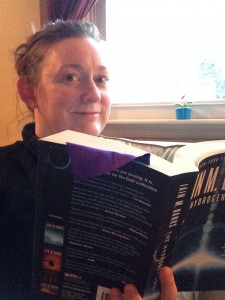
JulieReading

So I’m going back to the Bradbury Method of creativity-boosting. I did this last summer and it worked like a charm: I read a new story every day (and an essay and a poem as often as I could manage that) and found myself drowning in ideas. I had a burning urge to write; I sketched out ideas for stories; I wrote some of them over the next six months and released them as Kindle ebooks that have sold actual copies and generated actual profits. I have others that are still in various stages of drafting. But more than all that I was happy.

Follow Along?

So that’s what I’m going to do: Read and log as many short stories as I can this summer. I’m logging my activity at my personal reading log and you can do the same.

Short Story Reading Challenge Banner

Your Own Reading Log

I’m using Google Docs to log my reading.

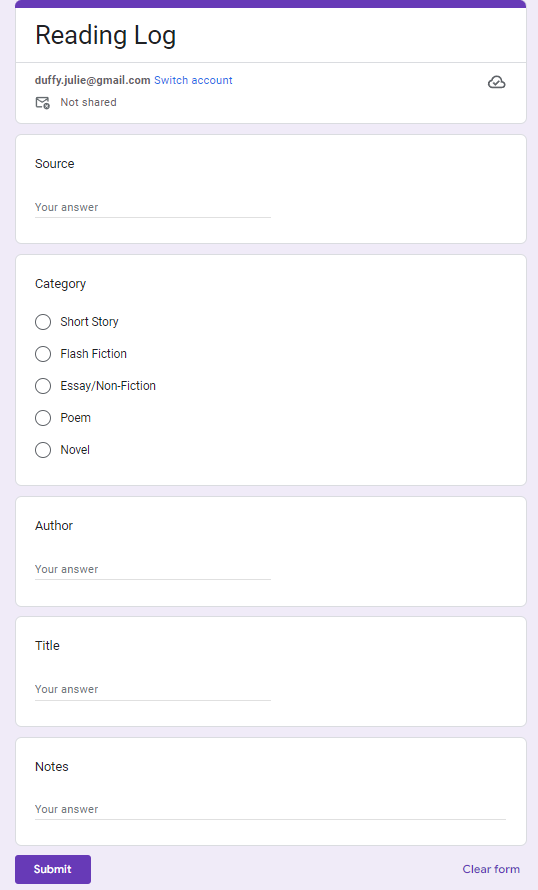
Here’s a copy of the form that you can use yourself if you want to join in and you like Google Docs. Save a copy of this form to your own Google Drive and rename it.

If you click on “Tools/Create New Form you can create a Google form, which i find to be a nice, clean interface for entering info. It’ll update the spreadsheet automatically (no silly little cells to click on).

Here’s a screenshot of my form, for reference.

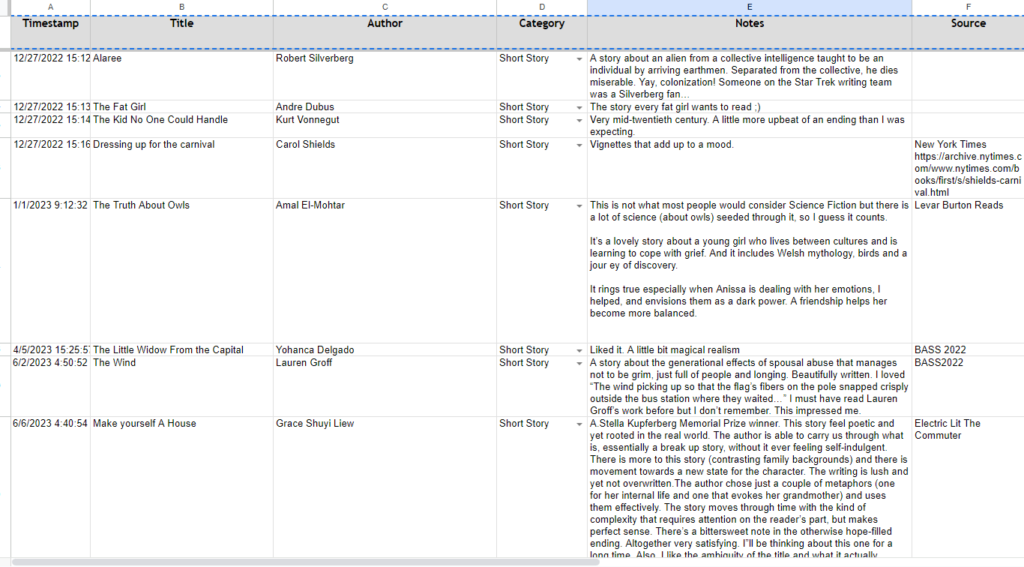
…and here’s how my ugly-but-useful spreadsheet looks:

Bonus Tip: Create A Handy Shortcut

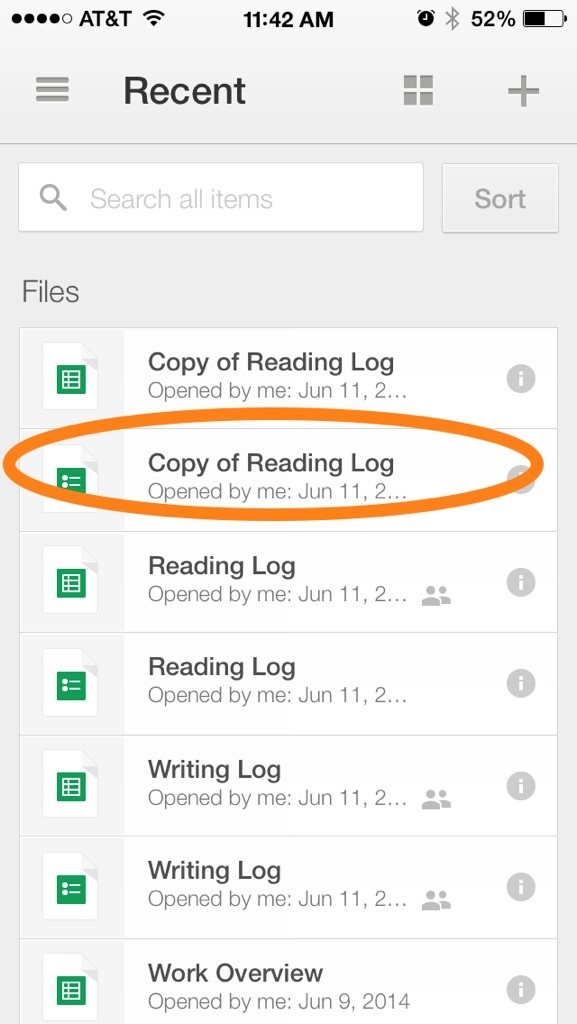
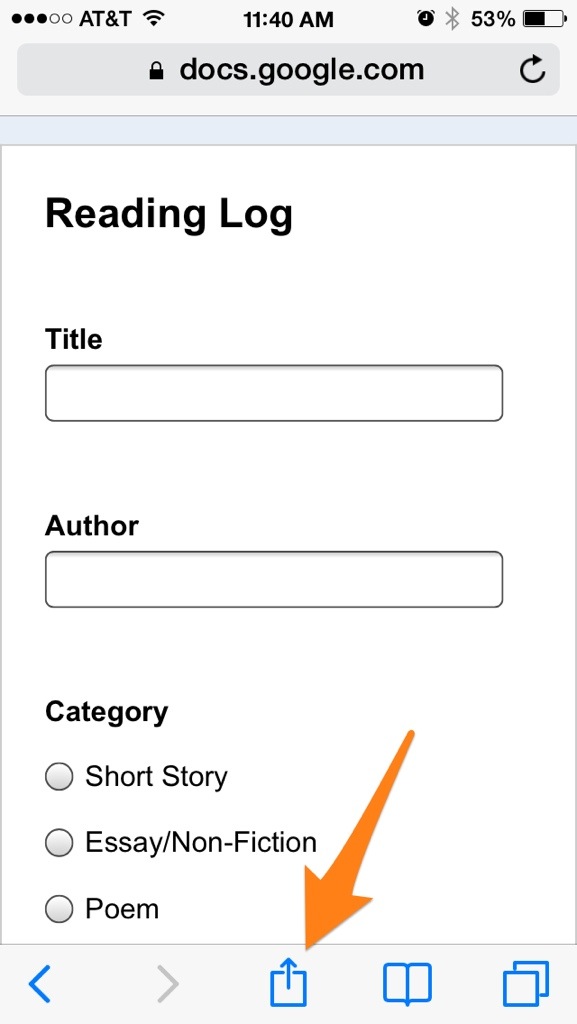
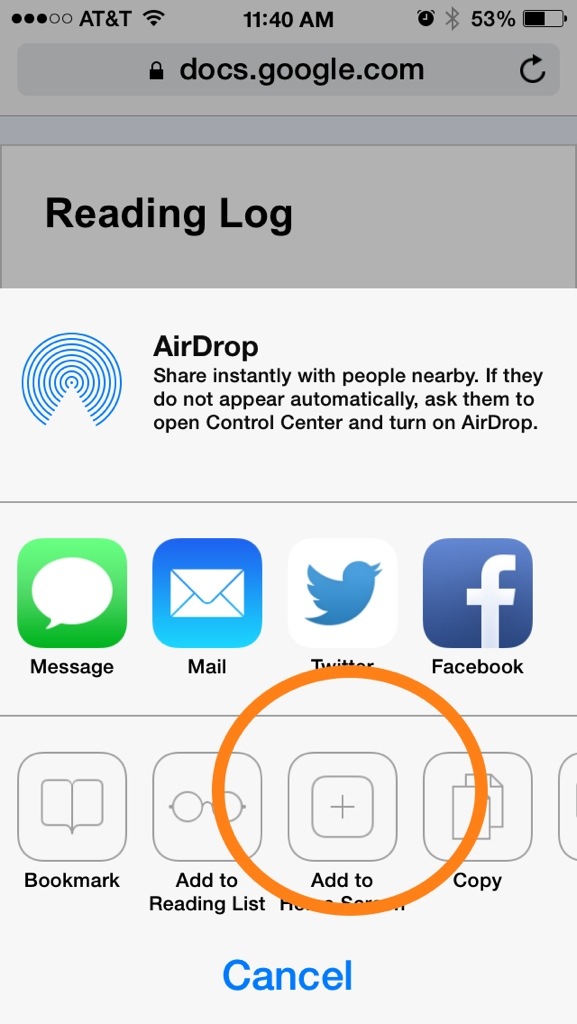
If you’re an iPhone user, you can follow these steps to get an app-like link on your phone, to make logging your reading easier (I’m a big fan of ‘easy’)
Step 1:

Go to your form on in your browser (drive.google.com/)

Then:

20140611-114857-42537401.jpg

Then

20140611-114934-42574384.jpg

Then

20140611-115019-42619145.jpg

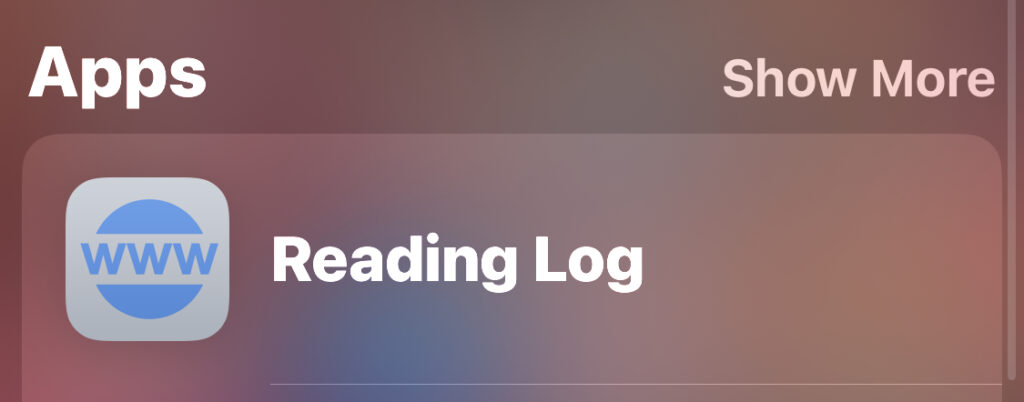
How it looks on your phone:

screenshot of app on iphone

Voilà!

Just make sure you save a copy of this document to your own Google Drive and don’t send me an email requesting permission to edit this copy, OK?