[Writing Prompt] Write A Children’s Story

There’s no feedback like the honest feedback of trying to hold the attention of a squirmy kid. This week I want you to try (or imagine) reading a story you’ve written to a kid under the age of 8. They are too young to worry about your feelings and they WILL let you know if the story is dragging! It’s great practice for holding the attention of former-kids too!

The Prompt

Write A Children’s Story

Tips

Continue reading “[Writing Prompt] Write A Children’s Story”

[Write On Wednesday] Write To Read

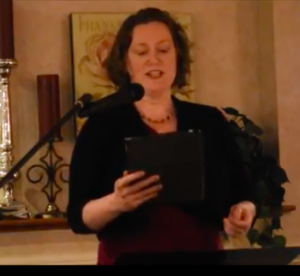
This evening I’ll be going out to another short story reading event, and it’s got me thinking about the audiences we write for.

Tonight’s story is adapted from one I wrote a while ago. I’m very happy with how it reads on the page, but when it comes to reading it aloud, I found I needed to cut a lot of description, tighten up the examples, lose some of the more languid language.

This month all the prompts will encourage you to try writing (or adapting) a short story with a specific audience in mind.

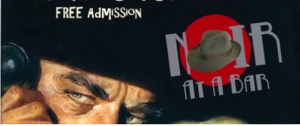
Noir Reading

The Prompt

Write A Story Designed To Be Performed Out Loud

Tips

[Write On Wednesday] 5-6-7-8

This month I’ve been encouraging you to write short stories in unusual forms and genres.

Since I’m spending today trekking back and forth to NYC to see the new Frozen musical with my kid’s school (I know, such a hardship, right?), I decided to urge you to write an outline for a musical today.

This is a bit of an odd one and if you’re not such a theater nerd as me, pick your favorite genre of movie, and imagine you’re writing an outline of all the sequences in your movie (there are probably about 8, with a big dramatic turning point at each quarter mark).

The Prompt

Write An Outline, or the Song/Scene List for a Dramatic Presentation

Tips

This isn’t going to read like a traditional narrative story

Imagine you’re looking at the program for a musical: it has a list of the scenes/songs you’re going to hear. Recreate that for your fantasy musical.

Here are some of the beats your two-act musical should hit:

  1. Big opening number that introduces the characters, setting, theme & tone.
  2. Character song – introduces your main characters desire and obstacle
  3. Introduction to the love interest/problem/antagonist
  4. Set back (probably a big chorus number)
  5. Comedy song (featuring a minor character, to relieve the tension – ‘Brush Up Your Shakespeare’, or ‘Gaston’)
  6. A serious ballad that restates the problem
  7. A decision song. The main character is going for it, assembling their team
  8. Set up for the big action of the second half. Cliffhanger! (Definitely have all characters on stage)
    [Interval]
  9. Another song restating the desire and obstacles of the main character
  10. Big number setting up for the climax, featuring multiple characters
  11. Final struggle song
  12. Quick charming song resolving the action
  13. Finale, a powerful song bringing back all the characters, even the dead ones. Probably has a similar title to one we’ve heard before.


So that’s it. Decide on a premise for your pretend musical. Figure out who your main character is, their desire, their obstacle and their antagonist.  Then go to town creating song titles that fit the outline above. Have fun with this! Come up with a title for your musical and feel free to add notes to your ‘program’ with character names, suggestions for interval drinks and snacks, and perhaps even sponsorships by local businesses!


Go!

[Write on Wednesday] Tell A Noir Story

inspired by the fact that I’m reading at a Noir event tonight, I’m challenging you to write an atmosphere laden, tragedy-laced noir story today.

The Prompt

Write A Noir Story

Tips

Otto Penzler, owner of Mysterious Books and editor of the annual Best American Mystery Stories anthology, has this to say about noir.

“Most mystery fiction focusses on the detective, and noir fiction focusses on the villain…The people in noir fiction are dark and doomed—they are losers, they are pessimistic, they are hopeless. If you have a private eye, the private eye is a hero; and he’s going to solve the crime and the bad guy will be caught. That’s a happy ending, but that’s not a noir ending.”

  • Now I don’t think it’s entirely true that a noir story can’t have a happy ending. It just has to be an imperfectly-happy ending.
  • Your hero might escape, but it’s by doing something terrible. Or he leaves a trail of devastation in his wake. Or the bad guys still achieve their ends.
  • Your hero and their love interest can achieve a measure of personal happiness at the end, but it’s not an uncomplicated, Disney-esque happy ending.
  • Noir stories tend to be heavy in atmosphere and imagery, and have a distinctive narrative voice.
  • The villain’s motivation is something you can explore more in a noir story than in a traditional mystery.
  • Life is never simple or sweet in a noir story.
  • There should be a crime, attempted crime, or mystery in the story.
  • Explore the seedier side of life, and don’t forget to use all your senses, and exploit all of your characters’ passions.
  • Read yesterday’s Reading Room post, for my thoughts on Dashiell Hammet’s noir story “Nightmare Town”.

Go!

[Write On Wednesday] What A Laugh

It’s one thing to be funny in conversation with friends, but writing comedy can seem harder, somehow. Today we’ll try out some techniques to make our funny stories funnier.

This prompt is adapted from ideas in The Hidden Tools of Comedy: The Serious Business of Being Funny by Steve Kaplan, which was recommended to me by StoryADay veteran, Almo Schumann.

The Prompt

Give your character permission to go after their desire, no matter what the cost Continue reading “[Write On Wednesday] What A Laugh”

[Write on Wednesday] Cataloguing

Today’s prompt kicks off a month of Write On Wednesday short story prompts that focus on odd or very specific formats of stories.

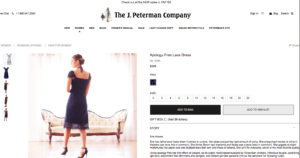
Remember when Elaine from Seinfeld got a job writing for the J. Peterman catalogue? Every entry was a tiny short story, usually ridiculous, about the fantasy character who would wear/carry each product.

That’s what I want you to try today.

J. Peterman Catalogue screenshot

The Prompt

Write an imaginary entry for a pretentious, high-end catalogue

Tips

  • Think about the character who might use the piece you are highlighting
  • Think about the image you’re selling to the reader
  • Take the characteristics or details of your imaginary friends, and amp them up to outrageous levels
  • Make yourself laugh
  • Be as over the top as you like
  • Include a description of the object that contains sensory details
  • Keep the ‘story’ to around 200 words
  • Once you’re finished, look at your little story and see what you could learn from it, when you’re writing character or setting descriptions in the future.
  • Could you use some of the techniques you employed here, even if you dial it back a little?


Leave a comment and let me know the product you described and the character you chose. What did you discover in your writing today?