
Delegate Your Way To Writing Success

Part of the Time To Write Series. Interested? Subscribe to the blog


Inside the Box 2289
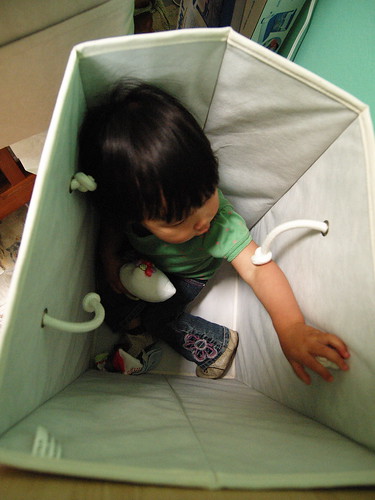
Do try to make sure the tasks you delegate are age-appropriate!

When my children were tiny I didn’t do a lot of writing. But there would come a day when I simply HAD to write. With a toddler in two, however, it became almost impossible to get through a full sentence without hearing that darling little voice yap,

“Mama? Mama! MAMA!!!”

I got to the stage where it was quite a relief when my boy unexpectedly ditched “Mum” and started calling me by my given name. At least it took a while for that to start to grate on my nerves!

The Delegation Revalation

One fateful afternoon, when my son — previously happily playing with toy cars at my feet — suddenly popped up and asked for a drink. For the third time that hour. I groaned and tore myself away from my half-finished sentence to fetch him a drink.

Then it hit me. My job as a parent was not to raise him to be helpless. My job as a parent was to teach him self-sufficiency. So what if he was only 3?

I started delegating.

That day I moved some plastic tumblers onto a low shelf in an under-the-counter cabinet and made a big deal of at last unlocking the water dispenser on the fridge. Sure, I had to clean up a few spills, but it was a price I was willing to pay to get a few uninterrupted minutes.

We quickly moved on to solo hand-washing, using a stool to get the toothbrush and toothpaste (creating a few precious extra minutes before bedtime). Then I packed away any trousers that didn’t have an elasticated waist and presto! I was freed from having to accompany him to the bathroom!

How Much Can You Give Away?

As the kids have grown, so has my hunger for writing time.

I now delegate all kinds of things.

  • Where I used to be in charge of bath-time and bedtime, my husband and I now share bedtime duty.
  • When I was deep in the crunch of StoryADay last May my seven year old, a-hem, learned how to make peanut-butter and jelly sandwiches.
  • While I toiled on my novel last November, my husband taught the boys how to fold their school clothes and put them away neatly.

I could feel guilty about deserting my family when I feel the need to write. Or I can celebrate my awesomeness as a mother who cares enough about them to teach them the life skills they will need when I eventually kick them out of my house. (Ten more years, Eldest. I’m counting.)

Delegation can be fun!

It’s not always, easy of course. Things go wrong. There is often a learning curve for the people you’re delegating tasks to. There might be occasional tears.

But stick with it. You CAN find ways to nudge the people around you become more independent, while also clawing back some of your precious writing time.

What about you? What one task will you try to offload this week? What poor helpless soul will you set on the road to independence?


Part of the Time To Write Series. Interested? Subscribe to the blog


Are You A Writer Or Just A Wannabe?

Nobody finds time to write. We make time for everything we have to do. Do You Really Want To Write?

Nobody finds time to write.

Few people have spare hours just lying around in the back of the closet, waiting to be discovered (and if you do, you probably have more trouble with motivation than time-management. That’s a different blog post!)

We make time for everything we have to do.

The crucial lesson, however, is that unless someone else has give us a deadline, we only make time for the things we find important; the things we enjoy.

Do You Really Want To Write?

Ask yourself: of all the things you did today, which of them mattered most to you?

  • What did you get out of reading all those tweets?
  • Did you get lost in Wikipedia doing ‘research’ for your novel? Did you really need all that information?
  • Did you need to watch another repeat of The Simpsons tonight, when you can already replay it, at will, from your memory?

Or would it have been more satisfying
to sit down and write something?

Do you even know where all your time went?


Part of the Time To Write Series. Interested? Subscribe to the blog

The Difference Between You and a Published Writer

What IS the difference between you and a published author?

Time.

In one sense, linear time: they were discovered before you were. Bad luck for you, good luck for them.

But in another, more useful sense: they made time to write. Have you?

Who Do You Think Does Stephen King’s Laundry?

Well OK, maybe HE can afford a housekeeper. But it’s just as likely that he still has to schlep down to the basement himself with a load of unmentionables whenever he runs short.

And you can bet your boots that your favourite midlist author doesn’t have a housekeeper. Or a nanny. But they still keep churning out the books year after year.

Things only get worse for your favorite author if they happen to be writing Literary Fiction. They are almost guaranteed to be a commercial failure and have to subsidize their income teaching rich kids at private universities to appreciate the rebellious soul of art. If they’re lucky they might negotiate a semester’s sabbatical in which to write their next book, but only if  they agree to eat nothing but oatmeal, turn off the heating and bust out the fingerless gloves.

And even if your favorite commercially-successful author can afford an assistant to make sure the cat gets fed, they  can’t pay her to write the book, do the revisions, talk to the agents and editors, catch the planes and go on the book tour for them.

When Do Authors Find Time To Write?

Just like us: in the gaps between Real Life’s obligations.

If you’re commercially successful one day (or have no life) you might be able to wedge those gaps open a little wider.

But life is happening to everyone. And somehow, thousands of people finish books every year.

When Will You Make Time To Write?


Part of the Time To Write Series.


Get a free 17-page creativity workbook when you sign up for more articles like this


One Simple Rule For Writing Success

Photo on 2011-01-11 at 10.36

Ever have one of those lessons that you know, but you need life to kick you in the face with again and again, because you can’t make yourself learn it otherwise?

I’m currently letting life kick me in the face with this one:

Write First. Then Let Life Happen.

It’s hard to make time for writing. It’s harder when you’re worrying about all the other things you have to do as well.

  • Do you peek at your email before you sit down to work on your current writing project?
  • Do you do a survey of all the projects you want to work on?
  • Do you check Twitter, because, c’mon each tweet is only 140 characters long?

And do you end up finding it harder and harder to start work on your actual writing?

Join me in my new pledge: Write First.

As much as I possibly can, I pledge to Write First.

The rest of life will catch up with me as soon as it possibly can, whether or not I invite it in. So when I sit down to write, I will write first, email later.

To help me with this pledge, here are some things I’m going to do

  • Plan what I’m going to work on before my next writing session begins – I don’t want to sit down and think ‘hmm, what will I work on today?’. I want to sit down, knowing that I’m working on that scene where my main character is doing this thing. Or that I’m going to take this story idea and turn it into a first draft. If I have to plan this the night before, fine. If I have to plan it while I’m driving home from a day of Real Life, that’s OK too. But I need to be ready to go as soon as I sit down.
  • I will not have any social media windows open until after I have reached my goal for the day.
  • I will not give up until I have reached my word count or project goal for the day. Even if I’m feeling stabby.

How about you? Will you join me? What will your ‘rules’ be?

The First Thing Writers Should Do Every Day

Beach Inspiration by Debbie Ohi
Used with permission from Debbie Ridpath Ohi at Inkygirl.com.

It’s hard enough to find time to write. Then, when you finally do, you face the paralysis of the blank page/blinking cursor.

The most useful tool I have discovered for getting past that frozen moment of potential is to do some warm-up writing.

Morning Pages And The Truth Point

I first discovered this technique in Julia Cameron’s The Artist’s Way in the form of her morning pages.

Cameron advises you to sit down first thing every morning and write three pages’ worth of nothing in particular, just to see what come out. She lets you get several weeks into the program before asking,

Have you discovered the Truth Point yet?

And I had.

I discovered that somewhere on the second page (if I was writing longhand), my writing went from being awkward to flowing. Try it. After a page or two, you’ll find something to write about or you might just find your descriptions getting more interesting, your turn of phrase more entertaining and natural.

After writing ‘nothing’ for three pages, you’ll be able to plunge into an actual writing project and be at your best on the first line.

750Words.com

Flash forward a decade or two, and the website 750words.com offers an online version of Morning Pages, complete with somewhere to do your writing in case you don’t want to write on your blog or in a notebook that someone might find.

The host of 750words.com credits Cameron with inspiring the site, and says that 750 words is the ‘truth point’ for many people.

I have writing friends who blog first thing in the morning just as a way of warming up. Other people write letters to friends.

Tips For Warm-Up Writing

The only thing I would add is that, like 750words.com, you should be free to protect your warm-up writing. It’s not meant for display. It’s meant as warm-up. If you’re happy posting your warm-up writing to a blog or posting it off toa  friend, great. But protect yourself as much as you need to.

And no sneaking off and reading Twitter or Facebook, or your favourite author, now!

Make Time To Write — Because You’ll Never “Find” It.

Time
Time by Robbert van der Steeg

Acres of Internet space have already been devoted to this topic, because it’s a tough one. There are as many solutions as there are people who want to write, so there is always room for one more blog post on the topic.

In this 3-post  series, I’m going to give you some thoughts, some links and some tools, to help inspire you to find time for your writing.


TIME FOUND UNDER SOFA CUSHIONS!

There is a reason you never see that headline. Time is never found. Time is made, cadged, scrimped, stolen, begged, borrowed, spent.

There is always something else you could be doing. Always. The trick is, finding ways to make time for the things that really matter to you.

Make Tough Sacrifices

I’m saying this first, to get it over with because it sounds awful, but you will have to make sacrifices if you want to make writing a priority. Some of these sacrifices will be hard.

Today I turned down a walk with a friend, which I know would have been lovely. Sometimes a walk with a friend is the perfect thing to boost your creativity. But for me, this week, it would eat into the only clear time I have to Get Stuff Done. Some of that stuff is mundane, household stuff, but part of that Stuff is Writing & Writing Prep.

No matter how nice that walk would have been,  I had to say ‘no’.  Next week, I’ll budget my time differently to make sure I can say ‘yes’.

Make Easy Sacrifices

Some things will be easy to give up, or at least good for you.

Me? I overeat. When I’m stressed or bored I head for the pantry and strap on the nosebag. It uses up time and leaves me comfortably numb. But if I’m serious about my writing, I resist the nosebag, make light, healthy meals and get back to my notebook. Good for productivity and good for my heart.

An ‘hour long’  TV show is actually 42 minutes of content. The rest is commercials. Why not record your favourite shows or download them from iTunes? Even if you still watch two shows in an evening, you could carve out 36 minutes for writing just by watching it commercial-free and still get to bed at the same time.

What changes could you make, even if occasionally, to create more time for the thing you really love to do?

Accept That You Can Write In Bursts

You don’t need long swathes of time in which to write. In fact, that can be bad for productivity. As someone who has suffered prolonged bouts of enforced inactivity (lack of a work visa, looking after small children) I can tell you that more free time does not make writing easier. You just get more creative with your excuses.

Jamming in 250 words here and there on your commute — a 1000 if you’re lucky on a lunch break — keeps your writing feeling like a treat, not a chore.

Plus, it’s how most full-time writers started. Stephen King wrote after shifts at the laundromat. Scott Turow wrote bits and pieces while working as for the US Attorney’s office. Most ‘literary fiction’ writers have quite demanding schedules teaching at colleges and conferences. Even if they do get to take a semester off to finish a novel, they can hardly wait for inspiration to strike during that one precious semester.

Accept That You Can Write In Big Long Jags

If you do get the chance to write in a big binge on the weekends, go for it. Don’t feel guilty. Some people spend hours watching sports every Sunday. Do what you enjoy; what makes you a better person. Negotiate with family/friends for writing time if you have to, and write as fast as you can for as long as you can, whenever you get the chance.

Separate Your Thinking Time and Your Writing Time

On that note, don’t put off thinking about your story even if you don’t have time to sit down and write. When do get some writing time, you want the ideas to be flowing. You can think about the next plot development while you are doing any menial task (of which we all have plenty).

But do try to focus. It’s hard to stop your mind wandering off to the sequel or what you’ll do with your wealth when people are using your name where they used to use Stephen King’s. Rein it in. Focus on the next scene, the next bit of dialogue, the next plot twist. Make notes if you have to.  Better yet, commit the ideas to memory, then you’ll be turning them over and over until it’s time to write.

Then, when you do carve your 36 minutes out of the evening’s schedule, your fingers will be twitching. You’ll be ready to jump right in.

Scare Yourself Straight

If you find yourself frittering your time away on Facebook or Twitter or in front of the TV when you know you could be writing, take an excellent piece of advice from Jon Scalzi:

“Think of yourself on your deathbed saying, “well, at least I watched a lot of TV.”

Take a moment now. Picture it. Use that fertile imagination of yours.

If you aren’t already sweating, then maybe there is a whole other reason why you can’t and won’t find time to write.

And that’s OK, too. Maybe you’re really a reader, a critic, an enthusiastic conneseur of the narrative form. Join a book group or a film society and have fun with your life. Just stop beating yourself up about not finding time to write.

But if you’re a writer, make time. You’ll never “Find” It.


Am I being glib? Smug? Wrong? Have you found things that work for you? Tell me in the comments.