I got another great question from the StoryADay community this week and I thought you might be interested in eavesdropping on my answer.
But first, in Notes from Julie’s Desk, I’m going to confess that my own ambitions for One-Story September were derailed by sickness.
Now that I’m on the mend, however, I can definitively assure you that—even if you start late—the One-Story method is paced to make sure you can still succeed. (Here on Day 5 I’m still fleshing out my story idea, but it’s proving extremely motivating to know I still have 25 days to work on this story, and a guided process to keep me on track. Want to join us? You can still do that, here.)
How To Choose What To Write
The question, paraphrased, was,
“I have so many ideas. How am I supposed to pick which one to work on? Or should I maybe try to incorporate them all into one piece? I don’t know…and then I get paralyzed.”
Sound familiar?
My answer went something like this.
Firstly, good for you for diagnosing the problem—that’s Step 1 in finding a solution.
Secondly, this probably is much more common than you probably think.
I firmly believe it’s one of the reasons a lot of writers get more done during challenges like StoryADay and when they have an upcoming deadline for a writing contest or themed anthology: the lack of choice is freeing.
OK, but without an external voice forcing your hand, how DO you choose?
The first thing to understand is that any choice you make is only a choice for now.
That’s certainly easier to live with (especially during something like One-Story September) than the idea that you have to make the right choice, for all time.
Choose.
Experiment.
Examine what happened (and how you felt about it), and then
Make another choice and run another experiment.
Does that really work?
“Creativity is not some privileged kind of thought free from constraint. Rather, it is normal problem-solving, just directed at a specific and interesting problem.” – Herbert A. Simon, quoted in Inside The Box by David Epstein.
This is both key and incredibly encouraging. Talent is not required. Genius is not required. A world-changing inspirational idea is not required. Just a problem that interests you, and your willingness to keep noodling on it.
There is no ‘right’ answer to ‘what should I write?’. Ever.
There are only these questions:
What specific idea do I find interesting, right now?
Can give it to a character and have it cause problems for them?
Can I sustain my interest in solving each subsequent wrinkle created as my character begins to tackle the main problem…until I reach the end?
Bonus tip: you won’t know if the answer is ‘yes’ until you get out of the abstract thinking phase and into the concrete ‘ideas on paper’ stage.
A short story—even a novel—has an end. The process of writing it has an end.. Any story you start should not become a life-long project.
You are experimenting. You are problem-solving.
So just pick something, and throw problems at your characters until they are smart enough to solve them (potentially happy ending), or have demonstrated that they can’t (potentially bleak ending).
Final caveat: the lure of the new idea is strong, especially when the problem-solving in your current project gets hard. Resist the urge to believe that you’re missing out on a ‘better’ idea, or a better story and abandon the one you’re working on. There’s nothing wrong with switching between projects if that makes your brain happy, but don’t believe the lie that there is a perfect idea, a perfect story out there waiting for you. Just keep solving problems.
Keep writing,
P. S. I’m serious: if you want to be writing and could use a framework to get you through this month, consider jumping in—fashionably late—to the One-Story Challenge.
How do you choose what to write? Does your method differ? Leave a comment here, and let me know.
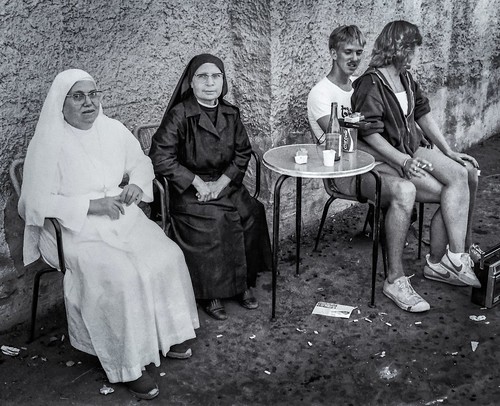
Choices: which story would you write? Photo credit: Wayne S. Grazio
There is still time left this year to meet some of your goals. The question is which ones?
You probably had a list of projects you wanted to write this year, and there are only two possibilities now:
You haven’t made the progress on the projects that you would have liked, or
You blew through your projects and generated a new, longer list.
Either way you have a choice to make:where do you focus your time and creative energy for the rest of the year?
Learning To Choose
“Successful people make decisions quickly and change their minds slowly”
-Napoleon Hill
This certainly seem to be a trait in many of the successful people I know.
“The only bad choice, is making no choice”
-Jeff Walker
I’ve been writing long enough now that I’ve seen people come along who were just starting out when I’d been doing this for a few years, who have overtaken me. Whether it’s the success of their website, or their book publishing, they seem much further along on one or other of the paths I want to take.
I’m sure you’ve had similar experiences. But why does it happen?
Partly, it’s to do with making choices.
Like many writers I tend to over think things. I tend to get stalled by the idea that there is a perfect choice.
We could beat ourselves up about that, but the reality is, as writers we make choices all the time. We need to get comfortable with that, so that our perceptions don’t hold us back.
Everything About Writing Contains Choices
You choose
to sit down and write today
when to work
what project to work on
What decisions you character’s going to make
The best words to convey their actions, their feelings, their surroundings.
Every choice you make is a rejection of every other choice.
Scary!
Does The Thought of Closing Down Options Paralyze You?
As a reforming over-thinker and reluctant-decision-maker, I’m here to tell you that, the more you make choices in your writing, the better you become at it.
And in fiction, making choices is always reversible.
Decision + Course Correction = Win
Here’s the really important part about choices: you aren’t locked into your choices, but you must review them and adjust your course.
For example, if you decide to kill off a character in your short story, but then find they would have been useful to have around later, you have some choices to make: must you correct the mistake or can you make some other character carry the weight that would have been taken up by the character you killed?
And in your writing life: you decide you’re going to write for two hours before bed every night, but find yourself tired and depleted and unable to create anything worthwhile. Should you continue to do what you think ought to work, or should you review the results of the experiment, decide you’ve learned something useful, and try writing at another time of day?
(Hint: it’s Answer B)
We’re not sculptors, lopping off pieces of marble that ought to have been a nose or an arm. If we accidentally chop off a story arm, we just go back in and add more words!
With words, we can fix everything.
Making choices in your fiction is fantastic practice for making choices on bigger issues.
TASK: Go back to your writing today with a sense of appreciation and gratitude for the fact that your medium is the insubstantial one of words and fiction; and that by making choice in your fiction you get to become better at it.
Don’t Be Too Capricious
The art of iteration (i.e. trying things, adjusting and trying the next, tweaked version) is in trying a new thing for long enough to really tell if it’s working, before you analyze and make changes.
If you’re trying to write at night, commit to trying it every day for two weeks (or the equivalent thereof) and only then, make changes.
If you change a plot thread or a character, write a good chunk of the story after that decision point, evaluate it, and only then make decisions.
Do not make decision on the fly. Do not change your routine or your decisions every day. Give every experiment time to run, then examine it, and change one little thing, and go again.
Think of these experiments as first drafts. My first-draft version of ‘write first’ allow me to check email before I started writing. After I had tried the experiment for a while, I got stuck. The experiment (the first draft) had run its course. The outcome: checking email derailed my fiction writing.
So I edited out ‘check email’, and gave the process another try. It went much better.
Limiting Choices
The fact that we commit to writing a story every single day in May, means there is no bargaining. There is no question of ‘am I going to write today?” No mental energy is lost on that decision. Instead we StoryADay-ers leap out of bed in a panic, thinking “WHAT am I going to write today?”
With the writing part assumed, we skip straight to making creative choices, and scanning the world for inspiration.
I advocate taking away as many choices as possible from your writing practice.
Making choices saps your willpower. If you spend your day making choices about your writing practice, by the time you sit down at the keyboard, you’re going to be pretty depleted.
Does your day go like this:
Get Up
Decide if I’ll write today
Decide when I’ll write today
Check email — to ‘clear the decks so I can write’
Tidy up/run a load of laundry– to ‘earn the right to write’
Make dinner
Push back my writing time for any of 1001 reasons
MAYBE get around to writing, and send the first half of the time allotted, trying to quiet my mind and get back into the story.
I would argue that if your day looks like this, you have depleted your will power so much that it is going to be really hard for you to make all the choices that you need to make in your story world.
Think about Mark Zuckerberg and his omnipresent grey hoodies, or Obama wearing the same blue suit (or multiples thereof) almost every day of his presidency. These people have so many choices to make in the day, the last thing they want to do is waste energy on choosing an outfit.
You have so many choices to make in your story world, the last thing you want to do is worry about reinventing your writing routine every day.
Protect Your Bubble
Now, I know not everyone can write first thing in the morning (it’s extremely rare day when I can truly sit down to write without having to deal with other people’s needs first).
But what you can do, is create a protected bubble of time that is for writing. In order to do that, make a deal with yourself that you will write at a specific time every day (or plan ahead for a weeks’ worth of writing days if your schedule is unpredictable).
And then stick to it.
This removes the self-talk about whether you’ll write today, wether you deserve your writing time, and all the bargaining we do with ourselves to ‘buy’ writing time.
My Current Practice
I have tried to make it, recently, an absolute that I write fiction first thing in the morning. I’ve tried to make it an absolute that I don’t look at email, Twitter, Facebook, or talk to any more people than absolutely necessary, before meet my fiction word count.
The more that has become a habit, the more my fiction output has grown, and the more my output has grown, the more creative breakthroughs I’ve had and, the better my writing has become.
Find Your Routine
You may find that you can write best at the end of the day, when everyone has gone to bed and you will have no choices except the ones in your story world.
Just decide when you’ll write, and stick to it for a couple of weeks. Decide if it’s working. Tweak. Try again. Keep writing!
DON’T BE AFRAID OF ROUTINE
I know we creative types often resist routine and commitment and structure because we’ve been sold this vision of the crazy creative.
We’ve come to believe that routine and structure stifle creativity and innovation, but in fact, routine in your working practices can actually free you up to be more creative in your work.
“Clarity and decisiveness come from the willingness to slow down, to listen to and to look at what’s happening.”
-Pema Chodron
We can’t build the creative space we need if we’re cramming our writing time into the space between all the will-I/won’t-I choices we put in front of our commitment to our writing.
Learning to get better at making choices and sticking with them is a powerful tool both in your stories, in your writing life, and in your life in general.
(Lesson #357 in how writing makes us better people!)
HOW TO GET BETTER AT MAKING CHOICES
Make your choices boldly. Stick to your commitments for a period of time. But remember that, as in writing, you can edit your choices later.
What will you choose to work on between now and the end of the year in your writing life? Something in your writing practice? A particular written project? Leave a comment
Find out more about the StoryADay
Superstars
The only qualification to be a ‘Superstar” is a desire to write and support your fellow writers.
A supportive group of committed writers, who meet virtually, support each other’s efforts, and inspire each other.