Making Time To Write – Success Stories

I find it useful to read case studies from people who have actually WRITTEN books (and possibly had them published and worked on a sequel). Theory is all very well, but hearing from someone who has actually done it? Much more inspiring. They also tend to be more passionate, less forgiving and much, much more practical.

clock face image
Photo by noor Younis on Unsplash


Here are a bunch of articles from working writers who answer the second-most-asked question they hear. [1. The first, of course, being “where do you get your ideas?”]

Jon Scalzi is a speculative fiction writer, Hugo award winner and creative consultant on the SyFy Network’s Stargate: Universe. He wrote an energetic answer to the time question which includes this choice paragraph,

There are lots of things I think I’d like to do, and yet if I don’t actually make the time and effort to do them, they don’t get done. This is why I don’t have an acting career, or am a musician — because as much as I’d like those, I somehow stubbornly don’t actually do the things I need to do in order to achieve them. So I guess in really fundamental way I don’t want them, otherwise I’d make the time. C’est la vie.

Jackie Kessler has written 12 novels (not all of them published, but hey, that’s a lot of writing time) and refuses to apologize for taking time to write [link no longer valid].

Screenwriter John August shares his work-a-day experience of becoming a professional writer. (“my general point is that you need to actively clear time in your day to write, which means giving up something.”) It’s not sexy, but it worked.

Jane Friedman talks about what it takes to make time to write.

Chip Scanlan talks about writing in small chunks, lowering your standards, rejecting the Soup Nazi.

And to finish things off for today:

Joanna Penn, The Creative Penn (@creativepenn on Twitter) shares this personal story, which debunks the ‘if I only had time’ myth a bit:

I once decided that I needed time to write my book. I had some money from the sale of my house, took 3 months off and tried to write every day. It didn’t work. I didn’t have anything to show for it, and went back to work disheartened at my inability to write. It was 4 years until I actually decided to try again.

Then I wrote “How to Enjoy Your Job” in 9 months of evenings, weekends and days off while working fulltime.”.

You can find the time – you just need to re-prioritise!


[updated 3/3/2020 with corrected and new links]

Writing Through The Holidays

ChristmasWritingPic

You’re busy. Or you’re sad. Or you’re conflicted. Or over scheduled. Or delirious with excitement.

Whatever the holidays mean to you, this time of year can be a killer for your writing productivity.

Depending on what you’re working on, that can be OK. Or perhaps you will need to continue to carve out some serious work time even though the 12 Tribes of HisFamilyAndYours are descending on you, daily.

Here are some encouraging words from me to you, on how to keep your inner writer and your outer productive-member-of-society happy together at the year’s end.

What Do You Need?

We’re used to asking what our characters need, but for once, let’s look at what YOU need, as a writer.

If You’re In The Middle Of A Project

If you have an ongoing project like a long short story, a story you’ve just started or a novel, you really will have to make time every day to write. The good news is you don’t have to do much. Even 250 words a day will keep your head in the project and your characters in your head. The even better news is that getting back to your imaginary world for even this little time every day, will be an incredible mood booster. Sneak off to a spare room for 30 minutes, come out smiling (and get the extended family talking about what on earth you keep in there!).

If You’re Between Projects

If you don’t have an ongoing project, my best advice for you is: don’t worry.

  • Don’t worry about trying to craft stories when you’re temporarily overwhelmed with commitments.
  • Don’t worry about writing stories when you have people you enjoy hanging out with.
  • Do keep a notebook or your smartphone nearby and make notes. Capture moments, turns of phrase, jaw-droppingly inappropriate comments by in-laws (note: you may have to excuse yourself and run to the bathroom so people don’t know you’re writing about them). Use this time of enforced activity and sociability to capture all these things and call them Story Sparks.
  • Don’t worry about what these Story Sparks might or might not turn into, just yet. Write them down. Keep them safe.

Keep Yourself Sane By Journalling

We write because we need to get the voices out of our heads, or because we need to know how we feel about things.

Just because you don’t have time to craft short stories over the holidays, don’t let that drive you insane.

Take a pretty notebook with you (keep it safe) and your favorite pen, and just write. At the start or end of the day, or in any stolen moment, write about your day.

  • Write about what pisses you off.
  • Write about what delights you.
  • Write about what scares you.
  • Let your handwriting reflect your mood. Write tiny letters or huge scrawls or in jagged, stabby motions.
  • Try to write at least one sentence in there that uses some of your writerly skills, but mostly, just let the voices out.

You don’t need ever look at this journal again (though it might be useful to drag it out in July when you are both thinking of writing holiday stories for submission to winter holiday markets and making your own Christmas plans for next year!)

Here’s wishing you a peaceful and fruitful holiday season. I hope you get some rest, and manage to keep your inner writer healthy, wealthy and raring to go in the New Year.

Help! I’m Drowning In Ideas!

Help! I’m suffering an explosion of creativity and I can’t seem to stop myself finding time and ideas for writing!

How It All Began

One recent evening I tucked myself into my armchair, put my feet up, pulled my knitting on to my lap and settled down in the flickering black and white light coming from my television as we fired up a couple of episodes of The Twilight Zone — our nightly non-guilty pleasure.

I love The Twilight Zone. The stories are so imaginative, they’re not afraid to take a dark turn (!); they’re stylish, well-crafted and intellectually stimulating.

I’ve been telling myself that they’re great research for my own story telling efforts.

And in a way they are. They’re all about a character (often a man, aged 36, oddly enough) who needs something, lacks something, wants something. Great stuff for storytellers.

But at the end of every Season 1 episode, I keep seeing this little line of text that makes me uneasy.

The line?

“Based on the short story…”

Short Stories Are Not Screenplays

I follow a lot of working writers’ blogs, but people who are getting paid to write the equivalent of short stories now are often working in TV. The influences they cite are other TV shows and writers. I follow those links and spend hours reading about how those other writers write and find success.

But I’m not writing screenplays. I need to remind myself how to show a scene in words, not images.

So I’ve embarked on another challenge (you know how I love a challenge, right?) and I invite you to come along with me.

Following Ray Bradbury’s prescription for writers (watch it here. It’s worth the time) I’m trying to read a short story every day, especially those from the late 19th and early 20th centuries — stories with some staying-power. I’m also trying to read one essay a day (though accessible, classic essays are proving harder to find than good short stories) and one poem a day (oddly enough, though poems are shorter, I’m finding it harder to rouse myself to do this part of the program).

The Results Are In

I’ve been doing this for just over a week and, as I said, I’ve been ‘suffering’ under an explosion of creativity. I’ve written one, long-for-me, 6,000 word short story and sketched out ideas for more than 50 more (yes, 5-0!) in a few different themes/genres, started my second story and written four blog posts.

And my kids are on vacation!

But I can’t seem to stop myself finding time to read and write.

I’ve rediscovered the joy of both reading and writing. I’m sneaking off, staying up late, ignoring people I love, to read — and little of it is on Facebook or Feedly or Twitter. I’m reading well-crafted fiction and non-fiction that has stood the test of time. And I’m bursting with ideas, references and imagery — I’m so full of ideas that I can’t hold them back. I simply have to write. (This is not always the case with me. I always feel better when I’m writing but I’m quite good at being lazy and grumpy instead).

Want to join me in being more creative, more productive, and more joyful? Start reading and writing today!

Here are some of the books I’m using to find short stories, poetry, essays and other inspiring non-fiction to read.

Let Me Bust Your Writing Excuses

The last two blog posts were all about what to do when you don’t feeeeeeel like writing (wah!)

This time I’m on a mission.

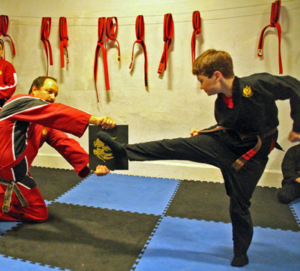
karate boy breaking boards

Post your biggest writing excuses below (‘not enough time’, ‘my inner editor won’t shut up’, ‘my ideas aren’t original’, ‘my kids are eating me alive!’) and I’ll let my inner drill sergeant loose on them.


Ready to have your go-to writing excuse busted? Post them now:


Does Thinking Count As Writing?

I asked a friend the other day how her writing was going.

“I’m thinking about writing,” she replied. “Does thinking count for anything?”

Thinking of you

Ouch. Sound familiar?

So, you know what I’m going to say, right?

Thinking…well, actually thinking DOES kind of count as writing. (There, did I surprise you? Wait for it…)

But only if you’re doing it in the right way.

(Oo, you knew there was a catch!)

Thinking Kinda Does Count…And It Really Doesn’t

  • Writers need to think — We need copious amounts of thinking time. We need to daydream and imagine and ‘what if’. Happily, we can do this while attending to all those routine brain-free tasks we have to do every day: you know, the ones that keep us clothed and fed and sanitary. (If you’re an adult you know what I mean. If you’re a kid…no, if you’re a kid you won’t even be reading this. You’ll just be writing your first best-seller. Move along.)
  • Beating ourselves up is not productive — unfortunately a lot of writers (especially the ones who aren’t doing any writing) spend a lot of their thinking time fretting about how they’re not writing, not good enough, a lousy person for not doing more actual writing. This is not only unproductive, it is destructive. The best way to stop this kind of thinking in its tracks is to write something — anything. (Keep reading for ideas on what you can write on a day like this)
  • Capturing ideas is useful — sometimes ‘not writing’ means you’re out living. This is a wonderful thing for a writer. You need experience to be able to write anything meaningful. You need to come home and process the stuff that happened to you today, so that it’s there in your brain ready for when you need it. We need to hate people and imagine all the things we should have said to them. We need to love people and freak out when our imaginations show us what life would be like without them. We need to wonder what it would really be like if our plane crashed on a desert island: how would we wash our clothes and what plant fibers could be spun into thread to repair them?
  • Thought vs.  creativity — There will come a time when you need to look at your work with a critical eye, but that time is not during the initial writing phase. In fact, the less you think while you’re writing your first draft the better. Turn off that brain, move your hands and just let the words pour out.

It’s all very well for me to sit here saying this. But how do you actually move from thinking to writing?

You Must Take Action

You have to actually carve out time to sit down and write. Even if you can’t finish a whole chapter. Even if all you can manage is 100 words, 55 words, 140 characters,

DOING something (i.e. writing, crafting a story and characters) is so much better than thinking. Always.

(You may not feel great while you’re doing it, but trust me, afterwards? You’ll feel awesome.)

How To Take Action With Your Writing

It’s easy to get overwhelmed and beat yourself up because you haven’t finished your first novel yet.

Screw that.

  • Set yourself a tiny goal and meet it. Write a twitter fiction story. Write a 55-word story. Write exactly 100 words (no more, no less). Set a deadline. Do the work. Now tell me that didn’t feel good.
  • Use prompts I know it can seem corny but grab a writing prompt and use it for your own purposes. I assigned everyone on my writing course the same prompt one day and you would have been amazed at the radically different stories that came back from 12 different people.
  • Embrace the first draft — Give yourself permission to write something truly dreadful. Tell yourself no-one is going to see it. Picture a baby learning to walk: they fall down, they get up again, they fall down, they get up again, and eventually they are up more than they are down. We learn by doing. We learn by making mistakes. Write something terrible, don’t show it to anyone. Remind yourself the goal is to write something, not to write something good. Not yet.
  • Get an accountability buddy — life comes at us fast. If you’re like me, there’s nobody knocking down your door to hand you a living wage for your fiction yet. It’s easy to let writing slip into the background and — whoosh! — a month has gone by without a single word written. By finding someone to keep you honest, you give yourself the kind of deadlines that you need. You don’t even have to swap writing samples. Just make sure you find someone who will stay on your case and not be too nice to you!
  • So yes, think. Think about your writing. Think about your characters. Think about what you’ll do when you’ve reached your goals.But most of all, keep writing.

    What one thing will you commit to writing this week? How will you make it happen?

    Leave your commitment below, & I will be your accountability buddy for this week (I will personally check up on you on Wed June 22!)

An Accountability Buddy: The Productive Writer’s Secret Weapon

Today’s guest post from Melissa Dinwiddie is a wonderful primer on how to use the StoryADay community to help you become more productive than you ever dreamed. Thanks, Melissa!

Farewell to Polina!

Do you know one of the most effective things you can do to get your writing done?

Make yourself accountable.

I don’t know the statistics, but it’s a well known fact that if you want to reach a goal, speaking your commitment — including your deadline — to someone you know will hold you to it makes you dramatically more likely to actually do it.

Accountability is a powerful tool, and there are a number of ways you can integrate it into your writing practice. One of my own secret weapons is an accountability buddy.

Here’s what I’ve learned about maintaining an effective accountability partnership.

At the start of the year I was in a mastermind group (another great accountability tool), assembled with the express purpose of helping each other accomplish one specific goal in the month of January. When that group dissolved, a couple of us decided to keep checking in with each other.

At first our monthly calls started to get a little chatty — understandable enough, since we liked each other and had come to think of each other as friends.

This is an inherent danger in any accountability relationship. The problem, of course, is that chatting does not make for finished projects and completed goals.

Accountability partners have to be vigilant, and must keep coming back to the purpose for their partnership. If you want to chat, set up another date specifically for that. During your accountability check-ins, stick with the agenda: keeping each other on track.

This is exactly what I did at the end of a particularly chatty call. “Before we hang up,” I asked, “what’s your next step?”

My buddy confessed that she had a novel that had been sitting in a drawer for way too long, and what she really wanted was to get it edited and up for sale as a download on her site.

“Aha,” I responded, kicking into coaching mode, “so what’s stopping you?”

I asked her realistically how long she thought the editing would take, and when she said “about four hours,” I suggested (okay, I practically insisted) that she do it this week. In other words, I held out an expectation that I thought was achievable.

With my kick in the butt, she was ready to take on this project that she’d been putting off, so the next step was to set up a check-in schedule that worked for her. She committed to emailing me a progress report every night before going to bed, and set a goal of a 2-3 chapters per day.

Although it turned out four hours was an underestimation, I’m pleased to report that in less than two weeks my buddy had finished editing her entire manuscript and was ready to tackle the production side of getting her novel made into a downloadable ebook format. She swears she never would have gotten there without my help.

Do you think this kind of partnership might work for you? Give it a try! To keep you on track, I recommend sticking with the same structure every time you meet. The following questions are a good jumping off place:

  • What did you achieve since we last checked in? Did you accomplish your goal?
  • What didn’t work? What are you going to do differently next time?
  • What goal do you commit to between now and the next check-in?
  • What can you use help with?

Remember to reserve your chatting for another time, and let me know how it goes!

Artist, Writer and Inspirationalist Melissa Dinwiddie helps creatives (and “wannabe” creatives) to get unstuck, get unpoor, and just plain play bigger. Find her at her blogs, Living A Creative Life and 365 Days of Genius.


Win! Win! Win!

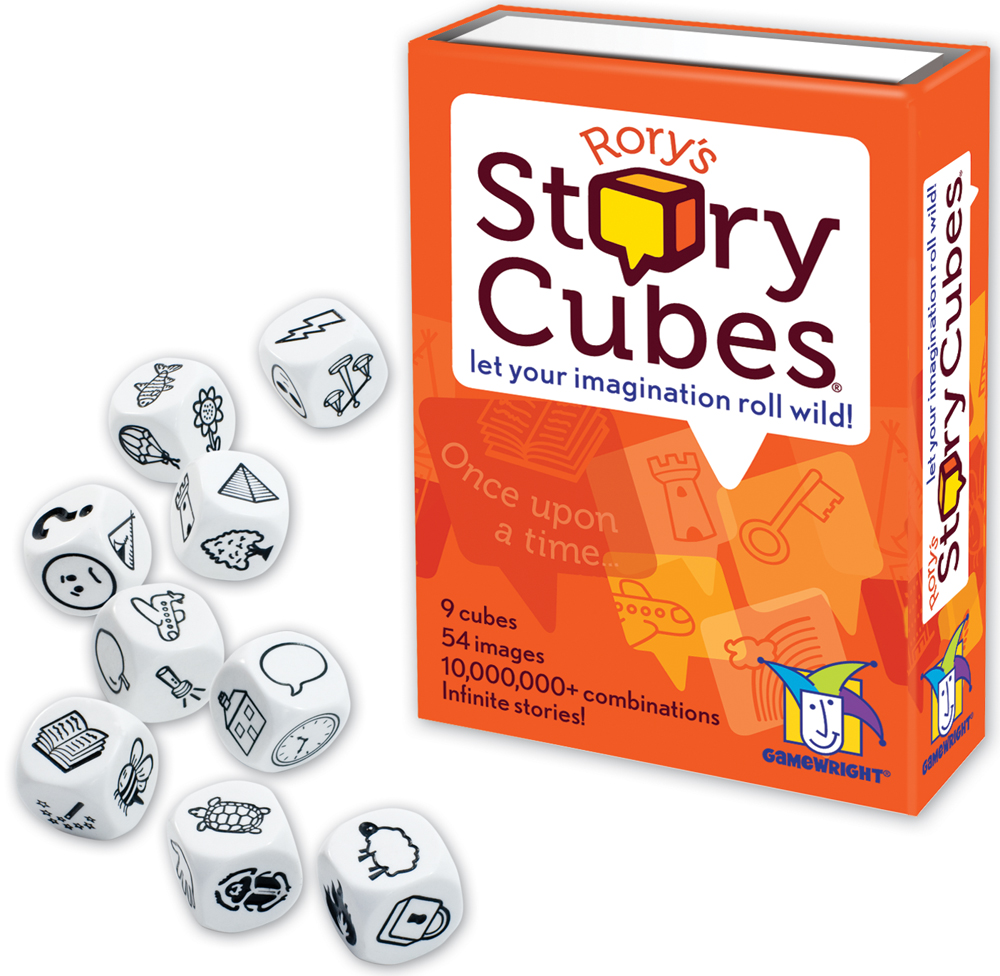
Leave a comment with your best tips for boosting productivity and/or working with other people and win a copy of Rory’s Story Cubes, a wonderful dice game that doubles as a story-telling tool. Roll the dice and make a story from the extremely cute images on the dice.


Today’s winner will be a random draw, so you get extra entries if you post about StoryADay on your blog, Twitter, Facebook or anywhere else (yes, I’ll give credit for blog posts from yesterday). Just leave me a comment saying where you posted.

Special thanks to Rory O’Connor and the lovely folks at Gamewright Games for donating this prize.