Failing at Writing? Now What?

There comes a time in every writing push when it feels like you’re failing. 

Whatever goal you set, you’re not meeting it. 

You’re imperfect. And your best intentions, it turns out, aren’t enough.

If this is you, you are not alone…and I have a fix: Instead of hoping to find time for writing, you must take concrete steps to make sure writing happens.

Startitis

We start projects (stories, a novel, a challenge) with the best of intentions. 

This time, we say…This time I’ll do it perfectly. If I just work harder, I won’t have bad days.

Yeah…that’s not a thing.

When It Gets Tough

Writers aren’t machines. 

We do have to keep showing up even when it doesn’t feel easy, but to do that and stay productive, you must show up with a boatload of compassion and joy. 

That is  easier to do a, when there are fewer decisions to make and b, when you’re around other people who get it.

Not “Will I Write?” But “When Will I Write?”

I’m as allergic to being told what to do and when to do it, as the next neurodiverse/creative person.

And yet.

Writing time doesn’t just appear because we want it to.

If you’re having trouble showing up for your writing right now (looks in the mirror. Nods.) you might need to take a look at your schedule and see if you have planned time where the writing can happen.

Without a plan, it won’t happen.

Even if you plan to write on Friday afternoon but get suddenly inspired as soon as you wake up, that’s fine. Flexibility is good. 

But having a plan–even one you react against–is a powerful way to limit the number of decision you have to make in the moment, and hoard your creativity for the actual writing..

Making time for your writing a gift

… to yourself and the world. 

It’s not about creating a rigid conveyor-belt-of-words you must staff at all times. 

It is about making your writing a priority, before other people’s priorities steal all your time away from you.

So. I’m off to put some potential writing times on my calendar. How about you?

Inspiration Corner

Here are some prompts that you might have missed, this month, to get your creative wheels turning.

Days 1-9

Day 10 – Darkness to Light, from Renan Bernardo

Day 11 – Inhumanity, from Julie Duffy

Day 12 – The Visitor, from Debbie Ohi Ridpath

Day 13 – Here’s a Quarter…, from Michele Reisinger

Day 14 – Mine your Emotions, from Jluie Duffy

Day 15 – Anarchic Archetype, from Julie Duffy

Day 16 – I Think I Can, from Somto Ihueze

Keep writing,

Julie

Pick a Prompt

(Any prompt)

The StoryADay Challenge has rolled into its second week for 2026, and there’s a lively community of writers leaving comments about their writing, over at the blog.

Even if you’re not taking part in the challenge, why not read through them and commit to writing one story sparked by one, this week?

Day 1 – The Last Word, from P.A. Cornell

Day 2 – Funktionslust from Aimee Ogden

Day 3 – Ride The Wind, from Myna Chang

Day 4 – A List of Words, from Julie Duffy

Day 5 – Stranger Than Fiction, from Jared Lemus

Day 6 – Talking to Animals, from Max Delsohn

Day 7 – Dip your Toe Into Memoir, from Heidi Clausius

Day 8 – Like a Sore Thumb, from Gabrielle Johansen

Day 9 – Non Stop, from Lara Hughes

(If you’d like to get the prompts in your inbox each day for the rest of the month and aren’t already, add your email address to this form.)

Each of the prompts has some explanation and inspiration built in, so go and check them out, then leave a comment and let us know how you got on!

Keep writing,

Julie

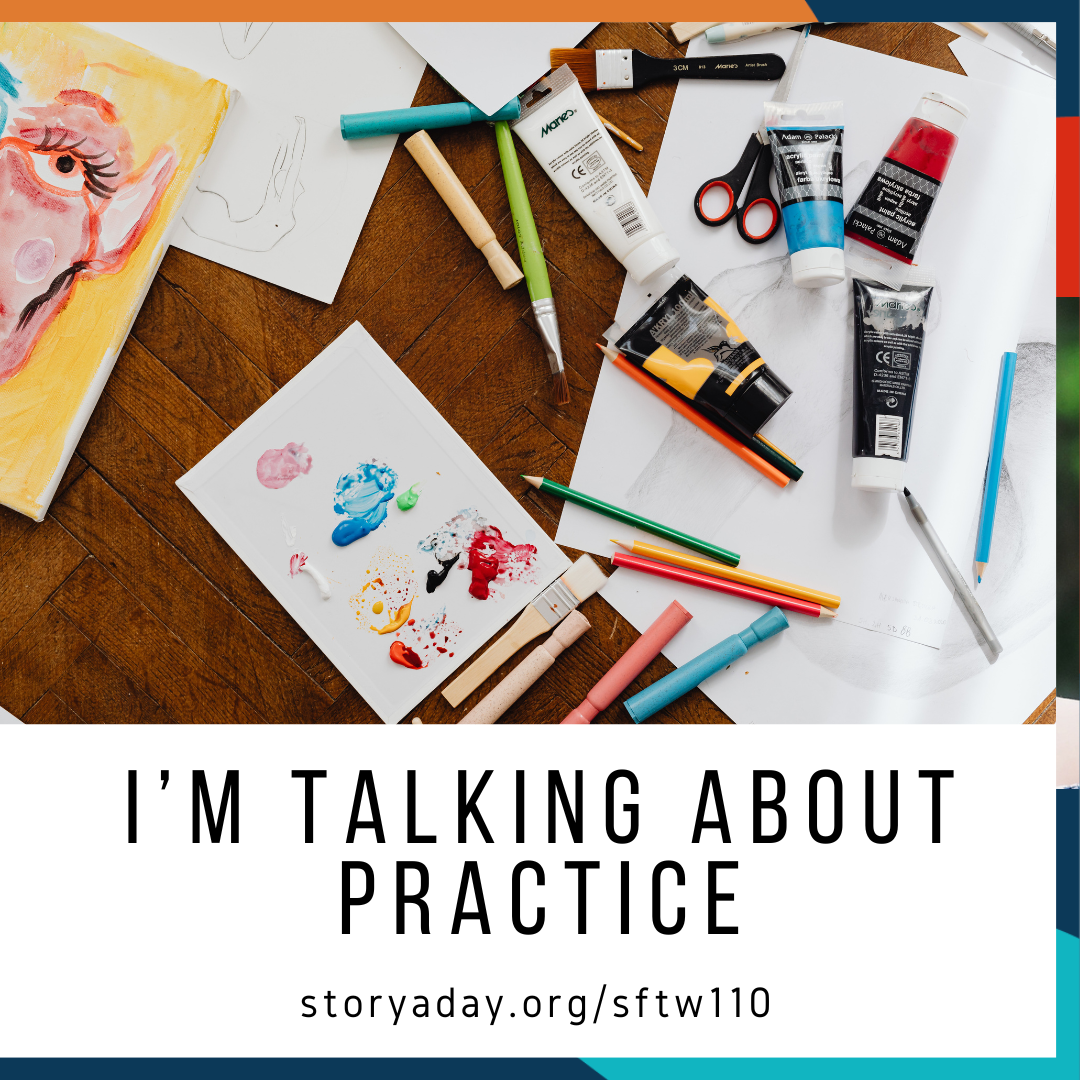
I’m Talking About Practice

Visual artists keep sketchbooks. 

I’m not sure if it’s something they’re taught to do or something they’re compelled to do., but if you tried to tell a visual artist not to ‘waste their time’ on anything but the piece they’re trying to sell, they would blink uncomprehendingly.

The constant, unfinished, experimental sketches are essential fuel for their finished works.

We writers seem to have a lot more angst about doing writing that doesn’t ‘turn into something’.

  • Do you ever worry if you’re wasting time because you’re jotting down ideas or fragments of conversations? 
  • Do you feel pressure to be completing works and getting them published?

I think we feel this way, in part, because of the way “how  to write “reference books are written (Chapter 1: how to find ideas, Chapters 2-11: Craft techniques to develop those ideas; Chapter 12: how to get an agent, publisher, seven-figure book deal and then sell the film rights).

But a more powerful reason we feel pressure to craft finished pieces is that everyone can and does write, daily, even if it’s just text messages, and has been able to do it since they were a child. 

Writing seems ‘easy’ in a way that creating a painting or a sculpture (or writing a symphony), doesn’t. 

When the people in our lives ask, “when’s that book coming out” we feel judged (even if it’s meant in a supportive way).

And so we rush back to the Big Project full of good intentions and impatience, only to discover that crafting that big project feels like standing at the foot of Everest, in flip flops, and hoping to get to the top by next weekend…because we haven’t equipped ourselves properly, or kept in shape by doing sketches, crafting characters, drafting dialogue, and writing down our ‘what if’s on a daily basis.

An invitation to a training mission: This week, capture 3 Story Sparks a day, for five out of seven days.

Hand write them in a special notebook you carry everywhere or capture them in a note in your phone. Use a journaling (or journaling app) to add pictures and sound snippets, if that inspires you. 

Don’t worry about what you will do with these sparks. Just practice noticing how the world unfolds around you.

Keep writing,

Julie

Writing Prompts: Sensory Writing Series

A few years ago I put together a series of short story prompts aimed at helping you explore the different senses in your writing. You can use them in a larger work in progress, or you could write a series of short works that go together, tied up with the theme of ‘senses’.

  1. Smell
  2. Sound
  3. Touch
  4. Taste
  5. Sight

Bonus points: write about the fuzzier senses (sometimes lumped together as ‘proprioception’) that allow you to do things like walk downstairs without looking at your feet, stand up in the dark without falling over, and know how closely someone is standing behind you, even if you can’t see them.

Just Released: Save Time with the StoryADay Challenge Handbook

Ever have one of those days where you want to write, but get to your desk and…nothing?

Well, I created StoryADay May for you (and me).

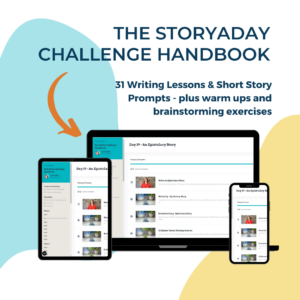
And this year I have a fantastic new way for you to gain all the benefits of StoryADay: but spend less time wondering what to write: The StoryADay Challenge Handbook.

With daily warm-ups and brainstorming sessions, this new StoryADay experience will propel you into your writing day and let you get to the fun stuff (the writing) no matter how busy you are.

StoryADay Handbook

Whether you’re planning to write a StoryADay in May or just want to be able to show up at your desk any day, write, and walk away feeling like you’ve flexed your writing muscles, improved your grasp on the craft, and created something real.

​ I built the StoryADay Challenge Handbook so you can get more out of this year’s writing prompts, in May…or any time you want to write.

(And this one is specially designed for the introverted writers who aren’t interested in writing sprints or hangouts or really anything other than getting words on the page and growing their skills.)

I’ve taken everything I’ve learned over the past 15 years about short stories, writing, writers, and prompts, and put it together in this brand-new offering. I think you’re going to love it (and the special 15th Anniversary discount….it’s like nothing you’ve seen from me since 2018!).

Find out more here

If you’re longing to get to your desk more often, and feel more fulfilled when you walk away, check out the brand-new StoryADay Challenge Handbook

Keep writing,

Julie

P. S. Yes, the writing prompts will still be coming to your inbox for free, if you’ve signed up. The Handbook adds video, audio, an ebook collection, and daily warm ups and brainstorming exercises designed to propel you into your writing, whether you’re taking the StoryADay May Challenge, or simply want to use it throughout the year to jumpstart your writing day. Grab your copy now

Endlessly Inspired

This week we take a look at the publishing industry, your goals, and how you can become endlessly inspired and creative…

Learning about the realities of the publishing industry can free you to create your own definition of success (that may or may not include traditional publishers). Step 1 towards success is to imagine your vision. Step 2 is to turn up for your writing, something the new StoryAWeek newsletter can help with!

For industry perspective: Jane Friedman’s The Hot Sheet: https://hotsheetpub.com/

Leave a comment about this episode: https://storyaday/episode259

StoryAWeek Newsletter Logo

Stay Weird – A Writing Prompt

The Prompt

Write a story just for you

A Story and Some Tips

When I was working for the first company to help authors publish using digital print on-demand tech, I talked to a LOT of authors,

  • Best-sellers like Piers Anthony who had grown disillusioned with traditional publishing;
  • Mid list authors who had been dropped by their publishers and wanted to republish out-of-print books or finish out that series their fans wanted;
  • Unpublished authors who hadn’t been able to place their novels with traditional publishers not because of the writing quality but because the publishers couldn’t see a large enough market for it.

Publishing is a business, and it’s hard to get picked, and it’s hard to stay lucky.

And if you want to ‘be published’ traditionally, you must convince someone that there is a large enough audience waiting for it.

But what if that’s not what you’re writing? Should you just stop?

The Woman Who ‘Invented’ a Genre

Continue reading “Stay Weird – A Writing Prompt”